Arrested development in Kingston 6 and 8

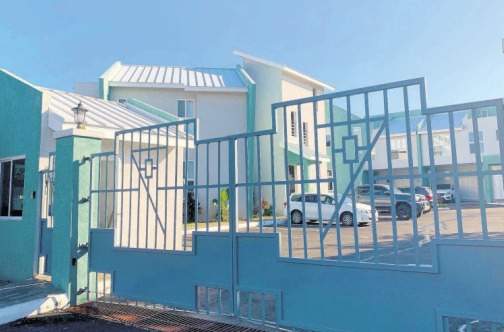
A developer who spent over $100 million on townhouses and apartments in the Golden Triangle Area was last week ordered by the Supreme Court to demolish them. It’s critical for buyers, bankers, and the regulators to understand whether this will lead to the burst of the housing bubble.

The case of Sarah Hsia et al v Martin Lyn et al handed down on January 21, 2020 involved an application by residents on Upper Montrose Road for an injunction to demolish townhouses and apartments that were completed prior to the developer’s application to modify the covenant that restricted the land to single-family residences.

It was heard at the same time as the developer’s application to modify those restrictive covenants.

According to the judgement, Justice Judith Pusey found that the character of the neighbourhood in Upper Montrose Road was still predominantly single-family homes and that it should remain that way.

Justice Pusey also found that the developer had little regard for the Kingston and St Andrew Municipal Corporation (KSAMC) as they completed construction without discharging or modifying the restrictive covenants and changed the layout to accommodate a third bedroom when approval had only been obtained for one- and two-bedroom units.

Who could have foreseen such a thing?  Delroy Chuck, Minister of Justice and Member of Parliament for North East St Andrew.

There is a letter from the minister of justice, which was copied to the prime minister and the town clerk, in relation to an unrelated case concerning a development within his constituency, in which he said: “Sadly, in Kingston 6 and Kingston 8 of my constituency, multistorey buildings have been allowed to be constructed contiguous to single storey residential units.

It is unfair to these long-standing residents, and out of character with the area.

Many of these residents have complained that the authorities have allowed their privacy to be invaded as occupants of these multi-storey developments can see everything in their bedrooms, front and backyards.

They feel their privacy and security have been compromised.

Whilst I support developments in the area, where single storey developments exist – approval should not be granted for any multi-storey development which allow (sic) for the invasion of adjoining residents’ privacy.

So unless the area is appropriate for a multi-storey development, I strongly urge that only townhouse development should be allowed in North East St Andrew.”

Unfortunately for these residents, the authorities don’t appear to share the Member of Parliament’s concern about privacy.

The residents of Upper Montrose Road brought their concerns to the attention of the town clerk, but no assistance was forthcoming from Church Street.

In another case in which the writer is involved that is currently before the court awaiting judgement, the KSAMC approved a multi-storey apartment building on Birdsucker Drive that was in breach of the regulations as it was too close to the neighbouring single-family properties.

Initially, the KSAMC said there was no breach.  After NEPA showed that the apartment building was, in fact, too close, the KSAMC responded that it’s not that the entire building was too close – just the balconies (that overlooked the bedrooms and backyards of the neighbours).

What measures have bankers put in place to secure their investment in the event an approved development is demolished?

Typically, a bank will not disburse until the development has been approved by the KSAMC, but if the KSAMC’s approval is rendered null and void by the developer’s breach of the conditions, then how secure is the loan? Equally important is the issue of the steps, if any, that the KSAMC takes to ensure compliance with the conditions of their permit.

Several months ago, it was reported in the news that the Supreme Court had granted a stay of the KSAMC’s building permit for a development on Dillsbury Avenue.  To date, construction continues and the authorities have done nothing to halt it, leaving the residents to fight for themselves and potential buyers and investors unaware that their money is at risk.

Bearing in mind that it’s largely pension funds and retirement schemes that are buying up these high-rise apartments before ground is broken, the foundation has been laid for a crisis of epic proportions. To whom will retirees look when their pension funds suffer?

With the judgement of Justice Pusey lenders now need to carefully reassess their exposure.  In addition to requiring copies of the permits, they should demand to see the objections that neighbours may have filed and all court documents related to the development.  They might wish to obtain an independent legal opinion on the matter or send an attorney to watch proceedings in court.

Because sometimes what goes up, will come down.
NWC head defends water production, welcomes high-rises

Even as debate rages over the impact of the influx of multi-storey residences and the attendant population increase on social services, the National Water Commission (NWC), which activated a water restriction regime in sections of the Corporate Area last Thursday, says it produces enough water to supply the city.

“Yes, we do produce adequate amounts of water,” NWC President Mark Barnett reiterated via phone yesterday.

It was a point he made at the Radio Jamaica community meeting in Half-Way-Tree last Thursday night.

“On an average, we produce just about 48 million gallons of water to the Corporate Area. If you look at the number of persons in the Corporate Area, to the supply, that water, it is adequate. It is very adequate,” Barnett stressed.

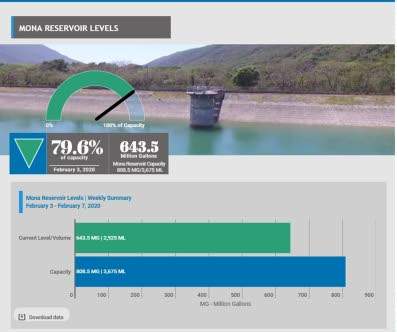
As of Monday, February 3, Hermitage Dam recorded a level of 87.2 per cent of its 343.2-million gallon capacity. The Mona Reservoir, meanwhile, had 79.6 per cent of its 643.5-million gallon capacity.

“There may be planned developments that I’m not aware of… What I can speak to is what is in front of us and, based on what is in front of us, our approval process is guaranteeing that those developments will have water,” the NWC boss added.

The issue, he argued, is that the state of the supply network gives rise to heavy leakage.

“What you have is a system that is very old and inefficient. When I produce, say 60 gallons of water, and I lose 40, or even more, it simply means I have less water legitimately to go around. It therefore means priority for the NWC is to reduce the amount of leaks that we have in the system.

“We all know the infrastructure in the Corporate Area is older than most of us. I know for sure it’s older than me. And, therefore, when you have such a system that you have under-investment, you’re bound to have a situation where you’re going to be leaking out most of what you produce,” Barnett explained.

While it’s not a new argument for the NWC to bemoan the condition of its decades-old water supply and sewerage system, on Thursday Barnett laid much of the blame on what he and other players in the construction development arena have described as a history of disorderly urban planning across the capital.

“It wasn’t orderly planned in a way that you put out your water supply system, sewerage as well, and then other developments take place. It doesn’t happen like that. So, we have always argued: We need the orderly planning arrangement that tells me where people are going to live; that tells me where the businesses are going to operate; that tells me where factories are going to be located. That helps you to determine the type of water infrastructure that you need to put in place,” the NWC head charged.

The town planning authority, Kingston and St Andrew Municipal Corporation, maintained that it oversees “a robust approval process” currently guided by the Provisional Development Order, 2017. That order, among other things, allows for higher population densities across the Corporate Area and the construction of multi-storey, multi-family units. Players in the industry, including some architects, engineers, and developers themselves, have raised concerns about the impact of the development on privacy, access to water, air flow, shading, solid waste management, among others.

The NWC has publicly advised developers that it is not responsible for supplying water to high-rise buildings above the second floor; it is the purview of the respective developer.

On Thursday, Barnett welcomed the increase in mid- and high-rise buildings, arguing that it provides a means of rehabilitating the NWC’s network.

“On the matter of high-rise, this may come as an objection to the audience, but the fact is, what we have seen now, we have been able to utilise what has been happening to renew a lot of our infrastructure… For those engineers who are here in the audience, they know in a water utility it is a continuous investment that you have to make up to 10 per cent per annum. The NWC is not able to do that on an annual basis because of other reasons. So, number one, we are renewing the infrastructure in the Corporate Area,” Barnett disclosed.

“And just recently, we spent upwards of $6 billion to improve our transmission means. That is investment that we should have done many years ago.”

Meanwhile, the NWC said the current water restrictions, which take effect from 9:30 pm to 4:59 am each day, affect areas served by the Mona Treatment Plant — Mona Heights, Old Hope Road, Hope Road, Hope Flats, Lady Musgrave Road, sections of New Kingston, sections of Half-Way-Tree, Hagley Park Road, Maxfield Avenue, Molynes Road, sections of Harbour View, Mountain View Avenue, Cross Roads, South Camp Road, downtown Kingston, Beverly Hills, Ravinia, Mona Road, Devon Square, Waterloo Road, Cassia Park, Eastwood Park, and Upper Maxfield Avenue. The restrictions are in an effort to hedge against the dry season when the inflows into the two main storage facilities in the Corporate Area are expected to fall off.

With a network of more than 150 underground wells, and about 250 river and spring sources, the NWC produces more than 90 per cent of the country’s total potable water supply. It provides more than 70 per cent of the population with direct water services, and only 15 per cent with wastewater services.

Shut down illegal projects, McKenzie urges

STETTIN, Trelawny —Minister of Local Government and Community Service Desmond McKenzie has charged municipal corporations to become more forceful in clamping down on unapproved housing developments in light of the dangers they pose in the event of an earthquake.

He was speaking against the background of a magnitude 7.7 earthquake which struck Tuesday about 80 miles from Jamaica, shaking people in the Caribbean and as far away as Miami, USA.

“The municipal corporations will have to become more aggressive in shutting down developments, whether big or small, that don’t have the requisite approvals from the local authorities.

“I want to say to the public, the Bible tells you that when the wise man and the foolish man were building the house, the foolish man wanted the easy way out so him build in the sand and the man who want to endure and to live good, did what was necessary, built on solid ground and we know what happened when the rains came,” the local government minister pointed out.

“I am urging all Jamaicans to stop ignoring the building regulation. You have many people who continue to build on the banks of gullies and you kotch up you house on the hillside and when the local authorities come you say is because you poor why dem fighting against you. You might be poor but they fighting against what you doing to protect you and your family and we are going to be doing lot of public education.”

McKenzie announced that Tuesday’s experience has prompted the Ministry of Local Government to engage in a massive earthquake education drive across the island to educate citizens on the dangers associated when the natural disaster strikes.

“We have taken a decision that the time has come, it should have happened before, but we now have to take the message about the dangers of earthquake right across the country. We are going into the parish of St Elizabeth on the 13th (February) in Black River for another such town hall meeting and then we are going to Lucea in Hanover the following week, the 19th. We are going to be going across the entire length and breadth of Jamaica, into the town centres, into communities such as this (Stettin), into the schools, to talk to Jamaicans,” McKenzie noted.

“This Government decided that earthquake is not just in the month of January we talk about it. We started weeks ago, we had a town hall meeting in Trelawny where we spoke about disaster, we spoke about earthquake, we had one in Portland.”

Noting that it is not something to gloat about, the local government minister expressed satisfaction that the Jamaican buildings stood up to a 7.7 earthquake earlier this week.

“Despite the challenges we have as a country, our buildings stood up and resisted a 7.7 — that is nothing to gloat about but it is important. And so we must continue to be vigilant, we must continue to do what is necessary,” McKenzie said.

He was speaking at the handing over of an indigent house in Stettin in the southern part of Trelawny before heading to Martha Brae, in the northern side of the parish to engage in a similar exercise.

Errol Ford | Bar Lawyers From Hogging Real Estate Transactions

Since the early 2000s, I have tried on more than one occasion to acquire a property in Jamaica and failed. My failure is linked mostly to my refusal to work with lawyers who should not be in the service industry.

In July 2018, I identified property in Jamaica that I wanted to purchase, having been preapproved for a loan. Fourteen months later, I am still not able to close.

In my case, the loan prequalification period expired even before I received an executed contract, which meant I needed to restart the process and resubmit all the paperwork. I discovered other issues with the property during the process and asked for my initial deposit back. It took weeks and several telephone calls/emails to have the money returned.

After the initial purchase demise, in February 2019, I decided to do a cash sale. I asked my agent if I could change the buyer’s lawyer and was told no. The parties agreed that this time, the entire process would take 60 days. This means I had to pay the buyer’s lawyer twice and pay my lawyer twice. Seven months after I started the 60-day cash sale process, I am still not closed.

I have spoken to a number of returning residents who have had similar experiences and, like me, have lost money in the process. Here is why. The real estate industry in Jamaica is primarily controlled by lawyers who are apparently are more interested in their financial well-being than in the interest of their clients.

Put succinctly, the longer they keep the clients’ money, the more money they make, which means they have no incentive to expedite the process. Little recourse is available to the contractual parties or even real estate agents.

There is a better way. Here’s how. Reduce or eliminate the role of lawyers and give more control of the process to the realtors and the mortgagee.

US TRANSACTIONS
United States real estate transactions are efficient, and can take as little as 14 to 30 days, from identifying the property to closing. The new system would improve the processing time and imbue it with transparency. The current system penalises buyers, erodes trust, and degrades the credibility of lawyers.

The process may be improved in the following way:

1. The buyer identifies a property.

2. The buyer’s realtor/broker prepares an offer and sends the offer to the seller’s agent/broker with a maximum time limit of 72 hours for a response– acceptance, rejection or counter-offer with time limits.

3. Once the offer is accepted, the buyer’s realtor completes the contract, which is pro forma.

4. Appendices are added to the standard language to facilitate any special terms or conditions not provided for in the pro forma.

5. The contract is then signed by the buyer and sent to the seller.

The approximate closing period is stipulated in the contract with consequences for non-compliance by both parties.

6. Once the contract is fully executed, which would outline funding source and other necessary conditions, the deposit is made.

7. The deposit is held by the broker or the title company. Communication between the mortgagee, buyer, buyer’s agent, seller, seller’s agent and the title company is escalated at this point to necessitate governmental requirements, mortgage processing, and any other actions the parties are obligated or wish to do.

8. The title search is done by a title company, which usually facilitates the closing.

It would not be necessary or required for a buyer or seller to hire a lawyer.

Prior to closing, the parties receive a settlement statement for review, which details the monetary obligations/receipts of the contracting parties.

On the day of or day prior to closing, the buyer is given the opportunity to walk the property to ensure that the conditions have been adhered to.

For closing, all the parties meet at the title company, the final papers are signed, cheques are exchanged, and house keys handed over to the buyer.

Errol Ford is a Jamaican living in the United States. Email feedback to columns@gleanerjm.com and blueslife1@hotmail.com.

Pension Funds Now Allowed To Buy Big Into Real Estate Companies

There is a possibility that real estate ventures may see more funding from the $600 billion pension fund industry flowing their way.

Recently passed pension amendments have tweaked restrictions on investment options related to the segment, allowing the funds to own shares in or provide debt financing to companies which build, own, and manage property but which are not their own subsidiaries.

Under the amendments, pension funds are now permitted to fund real estate companies in the form of debt or equity. For private companies in general, the limit of investments in this form is five per cent, but for real estate concerns, this limit does not apply.

In relation to investments in real property, the intent of which is to generate income, pension funds can take more than 30 per cent stake without prior approval of the Financial Services Commission (FSC), the new regulations say. However, they may not invest in mortgages for property outside of Jamaica.

An industry insider connected to one of the largest local pension funds said that the new regulation allowing funds to own shares in real estate companies in which they do not have a controlling interest will also improve market liquidity as shares are easier to dispose of than actual real estate. She said the costs associated with selling shares are also much less than offloading property.

Before this, the law restricted pension funds from taking a stake in private companies beyond certain limits without the FSC’s approval.

Now, equity and debt financing for real estate companies have been added as investment categories to which a limit does not apply.

The pension fund insider said the effect of the new amendments is to allow unlimited investment in real estate companies, but it should be noted, she said, that “real estate is not as easily converted to cash as, say, equities and bonds, so fund managers will have to be mindful of that. There is also the cost of transferring the shares versus that of real estate”.

As at March 31, 2019, the Jamaican private pension industry was valued at $607.2 billion. Total investments in real estate in all forms was $23.52 billion, or 3.86 per cent of total assets.

There was little year over year change. As at March 2018, pension funds held $21.37 billion, or 3.99 per cent of total assets.

Regulatory amendments were approved in July to broaden the range of permissible assets in which pension plans can invest and strengthen the legislative framework with respect to safeguarding the assets of pension plans.

Amendments to the Pensions (Superannuation Funds and Retirement Schemes) (Investment) (Amendment) Regulations, 2019, were moved by Finance and the Public Service Minister Dr Nigel Clarke.

On Wednesday, the FSC, which provides oversight of private pension funds, said that prior to the recent amendments, Regulation 29 of the Pensions Investment Regulations allowed for unrestricted investments in real estate except where real property is non-income generating, in which case it has a limit of five per cent of the fair value of the pension plan.

The FSC explained that the recent amendments to the investment regulations did not amend the limits associated with real estate investment.

However, amendments to Regulation 24A (3) now make allowance for a pension fund to invest in any equity and debt securities of a private company that is established for the sole purpose of holding the real estate assets of funds or schemes. This change essentially applies to the method by which real estate can be acquired and managed.

“This gives stakeholders in the pensions industry increased flexibility while keeping risk at an acceptable level,” the FSC said.

As at March 2019, real estate assets represented 13 per cent of total pooled asset investments of pension funds, increasing year over year by five per cent.

Comparatively, stocks and shares (40 per cent) and government securities (31 per cent) were the largest asset classes within these pooled investment arrangements.

St Thomas Poised To Go Prime In Real Estate Market

A view of the Caribbean Sea from Johns Town in St Thomas.
The price of property in St Thomas is already trending up, and realtors expect the trajectory to be maintained as major improvements to roads and other developments get under way in the parish that for years has held the title of being ‘forgotten’.

The pending rehabilitation of the 110-kilometre roadway between Harbour View in St Andrew and Port Antonio, Portland, and the launch of construction of the Morant Bay Urban Centre, which will bring commercial activity to the parish and its capital, are feeding demand for real estate and could potentially push up the price of new properties by double-digits, according to realtor Howard Johnson Jr.

Spanning 365,000 square feet, the Morant Bay Urban Centre will create a “one-stop shop” for residents with the amalgamation of the essential services provided by the Government, supported by additional services offered by the private sector. It will also deliver jobs in substantial numbers from the call centre that is expected to operate there.

However, it is the road project and its logistical implications that are seen as the biggest drivers of St Thomas’ property market.

“We expect to see an increase in property prices primarily because of the road infrastructure. Once there is infrastructure, property prices change. If you bought into a community that doesn’t have light and water at a certain price, the minute that infrastructure goes in, the price changes,” said Johnson, the broker and CEO of Howard Johnson Realty Limited.

A year ago, Jamaican Teas, through its real estate subsidiary Mahfood and Sons, developed and sold two-bedroom homes in Albion, Yallahs, which included a bathroom, kitchen, living area, and a porch at $8.5 million, up from the initial $6.5 million when the project started in 2013.

Today, a couple looking to relocate to the same community would have to fork out at least $5 million more for the two-bedroom home, according to a current listing on realty company Valerie Levy and Associates.

Yallahs is a 30-minute drive from Kingston and is in the proximity of the Norman Manley International Airport and downtown Kingston.

“I’ve always been an advocate for persons living on the outskirts of the Corporate Area, especially with the redevelopment of downtown. If you live in Harbour View or even Albion going towards Yallahs, you are within half an hour of work without traffic, and if you look in other markets, a 30-minute commute from home to work is not unheard of,” said Johnson, who is immediate past president of the Realtors Association of Jamaica.

“But if the development of Orchid Estate wasn’t profitable, I think it was the timing. It was premature to what is happening now. If you build or launch a development like that now, I think you will get better traction,” he reasoned.

Work on the four-lane Southern Coastal Highway Improvement project which will run from Harbour View to Port Antonio forms part of a larger plan by the Government to spur development and improve access across the 14 parishes of Jamaica. The Yallahs to Port Antonio leg has been put to tender and is expected to start next week.

St Thomas has a population of just under 95,000. Aside from the “bad roads” and the distance to Kingston, the parish of St Thomas has had two big disadvantages: its rural culture and its reputation for practising obeah; and crime.

“If there is a negative, I would point to criminal activities. People are scared to live out there. Also, if there is strong weather, then parts of Harbour View and St Thomas are prone to flooding. So along with road infrastructure, if we look at some of the other elements that are needed, then we should be in good stead for property purchases and property values,” Johnson said.

However, he dismissed the concern about cultural issues, saying that it has been used to stigmatise the parish and had no bearing on property values.

The realtor is confident that St Thomas can become another one of Jamaica’s prime real estate areas, given its proximity to the sea and the Norman Manley International Airport and its large acreages of untouched lands.

While he had no comment on the level of increases likely for property prices, saying that he is yet to do an analysis on the parish, Johnson says property buyers are likely to face price escalations anywhere between 5 and 16 per cent on new acquisitions.

He expects the market in St Thomas and the communities leading to it to open up both in terms of rentals as well as sales/purchases and that rentals would fall within the range of $60,000 per month as the redevelopment of downtown Kingston kicks into high gear.

“Quite a number of opportunities are developing downtown, and I believe that even for rental, there will be demand. Harbour View is going to become very relevant again. That’s the catalyst in my point, and the more we put in good road infrastructure, it’s going to make Seven Miles, Bull Bay, more attractive,” he said.

JMMB Real Estate Fund offers up to 78% return (Advertorial)

Financial experts tout real estate as one of the most viable assets you can invest in, as it typically offers investors above-average returns, with less risk, when compared to stocks, and gives you the opportunity to diversify your investment portfolio.

Christopher Walker, CEO, JMMB Fund Managers, adds, “one avenue that investors can leverage is the uptick in the real estate industry by investing in a real estate fund, such as the JMMB Optimum Capital (Real Estate) Fund, that gave up to 78% return to investors, over the last five years (December 2013- December 2018).”

The CEO, in encouraging investors to take advantage of the uptick in the real estate market now, explains that “the developments in the real estate sector such as the increased availability of financial options offered by financial institutions and the National Housing Trust (NHT), in addition to the recent reduction in transfer tax, make housing more accessible. As such, this sector provides an opportunity for investors to make real returns.”

Start Investing in Real Estate

Although investing in real estate may seem daunting, as the traditional approach of buying an investment property, either for rental, or to flip it at a profit, usually requires a deposit to cover some of the upfront costs associated with purchasing a property for investment and /or renovation, purchasing via a real estate fund is a viable alternative.

You can get started by buying the minimum 500 units required to be a part of the JMMB Optimum Capital (Real Estate) Fund for J$17,600 (price as at June 24, 2019). This allows you to then leverage the above-average returns that investing in real estate provides.

JMMB Optimum Capital (Real Estate) Fund has given investors, who remained in the fund, for the six-month period ending June 18, 2019, a 17.46 %* return. This return also outperforms inflation over the same six-month period, which was approximately 4.8%. In fact, the return is above the 44% – 50%*** price appreciation on properties in the corporate area, according to the president of Realtors Association of Jamaica (RAJ), Andrew James.

Investing in a fund, like the JMMB Optimum Capital (Real Estate) Fund, allows you to be a part of a pool of unit holders who collectively own a portfolio of assets, which consist of residential and commercial properties, in addition to fixed income assets such as bonds and stocks/equities.

Additionally, the JMMB Optimum Capital (Real Estate) Fund is managed by an expert financier, called a fund manager, whose role is to ensure that the best investment decisions are made on behalf of the fund. The fund manager is responsible for overseeing the daily operations of these properties and so you forego any hassle associated with being a landlord.

How Does the Fund Work?

This investment will provide you, as an investor, with continuous earnings from the increase in the unit price of the JMMB Optimum Capital (Real Estate) Fund, which generates income from: rental – in both USD and JMD; the capital gains on revaluation upon the sale of properties; and interest income from the fixed income holdings. A profit (capital gains) is realised when you sell units at a higher value than you had purchased.

The unit price may vary from time to time, depending on the performance of the Fund, which is influenced by the valuation of the different assets – real estate, stocks and fixed income – and market conditions. You can, therefore, expect fluctuations in the daily unit price.

Units in this Fund can also be sold at any time, to realise a profit, thereby giving you the flexibility of accessing funds, should the need arise. It is recommended, however, that, similar to investing in real estate directly by acquisition of a property for resale or for rental, you will need to hold this investment for the medium to long-term, at least the recommended five years, to reap the best returns. The earnings from this investment can also assist you in making your home ownership goal a reality, or to pursue other financial goals.

With the boom in the real estate market locally, now is the time to start investing and doing so through JMMB Optimum Capital (Real Estate) Fund opens up a world of possibilities.

To open an account, you will need the requisite documentation including national identification; proof of address and income; and tax registration number (TRN) to get started.

Want to start earning more with JMMB Optimum Capital (Real Estate Fund)? Click this link: https://hubs.ly/H0jBLXs0

* Based on six-month performance between January 18 to June 18, with no withdrawals being made from the fund.

** Based on the fund’s performance between December 2013 and December 2018, with no withdrawals.

***This is based on avg. housing appreciation of 2-4 bedroom residential property in Kingston 19 & 20, between 2010 and 2018

Realtors expect increase in property sales this year

Realtors say they expect an increase in demand for first-time homebuyers in 2019 even as they indicate that those who rent homes are experiencing harder times as property owners list with Airbnb, the online community marketplace that connects people looking to rent their homes with those who are looking for accommodation.

Immediate past president of the Realtors Association of Jamaica Howard Johnson Jnr says that whereas he endorses short-term rentals and not just Airbnb, it has a negative impact on the local market.

“The gains from short-term rentals are much more attractive than that of a local rental,” he said, adding that “earnings can be generated by a much more stable currency such as the US dollar.”

Broker at Coldwell Banker Jamaica Realty Andrew Issa says that he is expecting more Jamaicans to express interest in buying a house during this year.

“I predicted 2019 will be a very strong year for real estate as demand continues to be driven by a stable, strengthening economy with low mortgage rates,” he said. “Jamaica has been back on the international list (as a country in which) to invest from early 2018. While crime did slow the momentum, it appears that Jamaica’s economic indicators are within the parameters for foreign investors,” Issa added.

Sellers’ Market

He said that the sellers’ market continues to strengthen across the board in both residential and commercial markets but noted that prospects are challenging for first-time homebuyers.

“In the residential market, you have first-time homebuyers who now qualify to buy based on their NHT (National Housing Trust) mortgage points and low-interest rate mortgage instruments being offered. Unfortunately, demand is still outpacing supply. As the economy continues to grow more and more, young professionals are placing their priority on buying their first property,” said the real estate broker.

Johnson said that he is anticipating more persons looking for investment properties for short-term rentals as well as the demand by first-time homebuyers to increase. “I’m suspecting that the new home starts promised by the Government, through the NHT, will also resolve many of the housing dilemmas now being experienced,” he said.

He noted that while the cost of houses seems to be trending up, “the higher price … is very subjective as sales are being generated despite what is being perceived. In many cases, persons are still financing their homes due to competition on interest rates in the marketplace. I have not observed any disruption in the mortgage market, but rather, more aggressive marketing for your business by financiers”.

Issa said “Investors are liking the returns being gained from the rental market and also seeing a 10 per cent annual increase in prices bring a very attractive mix to their investment portfolio. These investors continue to buy (at) locations that will attract expatriate clients and bring returns in US dollars.”

DOWNSIZING

He also observed that “downsizing is a segment of the market that is growing. The ageing population is beginning to make the choice that downsizing is a practical and sound economic decision.

According to the broker, commercial demand is also growing. “The daily request is, ‘Find me a commercial building with an ROI (return on investment) of seven to nine per cent, and I will buy it’,” said Issa, referring to potential investors. “So with all these small financial institutions being launched, I expect to see much more activity in developments of this nature. These new, young managers are aware of the built-up demand by young entrepreneurs searching for locations,” he added.

Issa also said that demand continues to grow for business process outsourcing space and that it will drive additional commercial build-out.

Despite the higher costs for houses, he does not expect that to inhibit sales. Issa said that “all mortgage companies have a similar formula for approvals, and with more institutions pushing for a larger share of the real estate market, I expect that these homes will be financed with buyers having two to three options to choose from”.

Airbnb investors, he noted continued to be a factor. The realtor said that the market for Airbnb is definitely a factor in the increase in apartment purchases.

However, he noted that “it is not for the faint of heart investors” considering the time and detail involved in managing the units.

Issa believes that overall, the real estate market in 2019 will bring attractive results for both private investors and financial institutions.

“Don’t be surprised to see very large properties change ownership this year as owners use the cash (from their sale) to expand their businesses while remaining tenants” by renting the same properties, he said

built by ignite